
If you’ve spent any time browsing tech forums or social media discussions lately, you’ve probably seen bold claims about the “death of coding” or the supposed decline of web design as a profession. At first glance, it may seem like the industry is heading toward irrelevance. But if you look closer—at real data, real workflows, and real outcomes—a completely different picture emerges.
What we are witnessing in 2026 is not a collapse, but a transformation. The web industry isn’t shrinking—it’s evolving at high speed. Think of it less like a factory shutting down and more like a high-performance system upgrading its core engine. Some professionals are stepping away because they’re attached to older ways of working, but those who stay are discovering something powerful: their roles are expanding, not disappearing.
This is not the end of web creation. It’s the beginning of its most exciting chapter.
From Coders to Decision-Makers
For years, developers were expected to spend countless hours writing repetitive code—often reinventing the wheel for every new project. It was time-consuming, mentally draining, and far from efficient. Today, AI tools have taken over much of that routine work.
But here’s the reality: this hasn’t reduced the importance of developers—it has elevated it.
Modern developers are no longer just builders. They are reviewers, strategists, and decision-makers. While AI can generate code quickly, it still struggles with accuracy, context, and long-term reliability. That’s where human expertise becomes critical.
In fact, many developers report that AI-generated code often appears correct at first glance but contains subtle issues that require deep knowledge to fix. This creates a new kind of value: the ability to evaluate, refine, and secure what machines produce.
In simple terms, the role has shifted from “typing code” to “owning outcomes.”
A New Era for Big Ideas
In the past, one of the biggest barriers in tech was cost. Building even a simple product required time, money, and a full team. As a result, countless ideas never made it beyond a rough concept.
That barrier is now gone.
With AI dramatically reducing development time and cost, companies are no longer forced to choose just one idea—they can explore many. Instead of cutting teams, businesses are expanding their ambitions.
We’re entering a period where innovation is no longer limited by resources, but only by imagination.
This has triggered a wave of new products across industries—tools for small businesses, platforms for niche communities, and solutions for problems that were previously ignored because they weren’t “profitable enough.”
The market isn’t getting smaller. It’s getting wider.
The End of Repetitive Burnout
Let’s be honest—most developers didn’t choose this career to write the same boilerplate code over and over again. That kind of work leads to frustration and burnout.
Now, AI handles much of that repetition.
And the impact is significant.
By removing the “busy work,” developers can finally focus on what actually matters: solving complex problems, designing systems, and building meaningful experiences. This shift allows for deeper concentration, better creativity, and a more satisfying workflow overall.
Instead of measuring productivity by how much code is written, teams are starting to value clarity, flow, and impact.
That’s a major upgrade.
Designers Are Becoming Strategists
The design world is going through a similar transformation.
When AI can generate visually appealing layouts in seconds, simply making something “look good” is no longer enough. The real value of a designer now lies in understanding people—how they think, behave, and interact with digital products.
Designers are becoming experience architects.
They focus on accessibility, usability, emotional connection, and ethical decision-making. Instead of just delivering screens, they shape how users experience technology as a whole.
Portfolios are evolving too. It’s no longer about showing pretty visuals—it’s about demonstrating thinking, problem-solving, and real-world impact.
The Rise of the One-Person Powerhouse
One of the most remarkable shifts in 2026 is the power of individuals.
With AI assisting in coding, testing, and even content creation, a single skilled creator can now accomplish what used to require an entire team. This has led to the rise of independent builders who can launch products, run businesses, and scale ideas on their own.
The barrier to entry has dropped dramatically.
You no longer need a large company or massive funding to build something meaningful. You just need skill, clarity, and the ability to execute.
This has made the tech space more dynamic and competitive—but also more open than ever before.
The Human Role: Trust and Responsibility
As AI-generated content floods the internet, a new challenge has emerged: trust.
It’s easier than ever to create content—but harder than ever to verify it.
This is where web professionals play a crucial role.
Developers and designers are becoming the guardians of digital integrity. They are responsible for ensuring that systems are secure, data is accurate, and user experiences are safe and ethical.
Machines can generate—but they cannot take responsibility.
That responsibility belongs to humans.
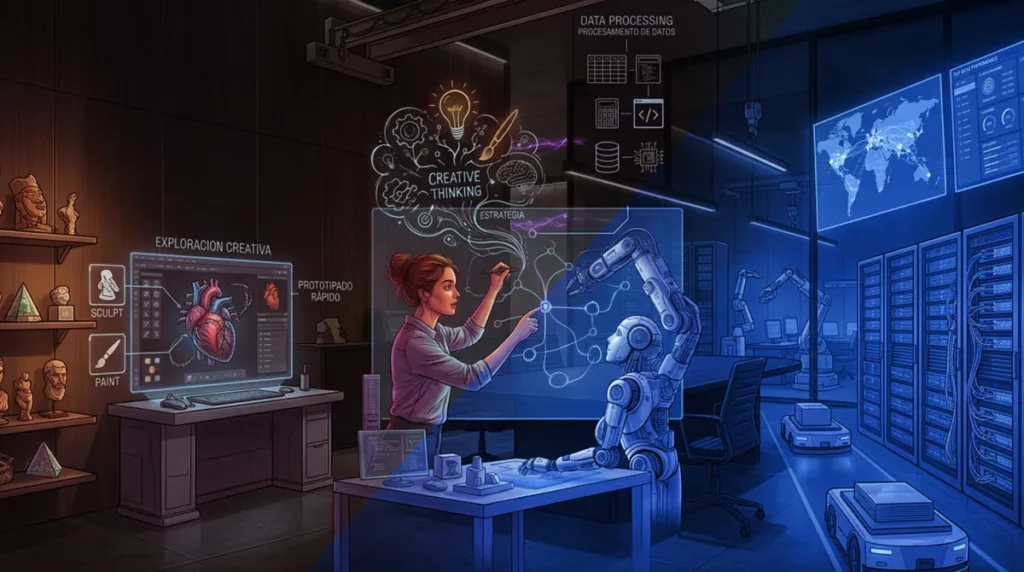
The Real Future of Web Creation
The web industry isn’t disappearing. It’s simply shifting its focus.
Less typing. More thinking.
Less repetition. More strategy.
Less execution. More ownership.
For those willing to adapt, this is not a loss—it’s an upgrade.
2026 is not the year web creation declines.
It’s the year it becomes more creative, more human, and more powerful than ever before.